How to Overcome Driving Anxiety After a Car Accident: 5 Evidence-Based Steps
If you feel anxious, shaky, or even panicked at the thought of getting back behind the wheel after a car accident, you are not alone. It is common to experience fear, hypervigilance, racing thoughts, or physical symptoms like a pounding heart, sweaty palms, upset stomach, or shortness of breath after a crash.
The good news is that these reactions are treatable. For many people, symptoms gradually lessen with time and experience. For others, a structured approach can make all the difference in helping the brain feel safe again.
Why Do I Feel So Scared to Drive After a Car Accident?
After a car accident, your brain may start treating driving as if an accident is going to happen every time, over-estimating the risk. This can create a strong fear response every time you think about driving, sit in a car, or hear traffic sounds.
That fear is not weakness, and it does not mean you are broken. It means your nervous system is trying to protect you. The problem is that sometimes it becomes overprotective.
That is where gradual practice, often called graded exposure, can help immensely!

Step 1: Calm Physical Anxiety to Help You Get Behind the Wheel
If getting back in the car feels overwhelming, start here. Learning simple tools to calm your body’s stress response helps you build the confidence to tackle exposure practice.
One useful strategy is paced breathing, especially breathing with a slower exhale. This can help reduce the body’s stress response enough to make it easier to follow through with practice.
Try something simple like:
Inhale for 4 counts
Exhale for 6 counts
Repeat several times
Remember, the goal is not to eliminate anxiety completely. The goal is to make the anxiety more manageable so you can move forward with your practicing!
Step 2: Practice Grounding Coping Statements for Driving Panic
Sometimes it helps to have a few grounding statements ready before you practice. You might say to yourself:
“This is uncomfortable, and I can do hard things.”
“My pounding heart means I am nervous, not necessarily in danger.”
“My brain is trying to protect me, and I can help it recalibrate.”
“These thoughts are just thoughts. They do not control me.”
These statements can help you stay connected to the present moment instead of getting pulled into worst-case scenarios.
Step 3: Reconnect With the Benefits and Values of Driving
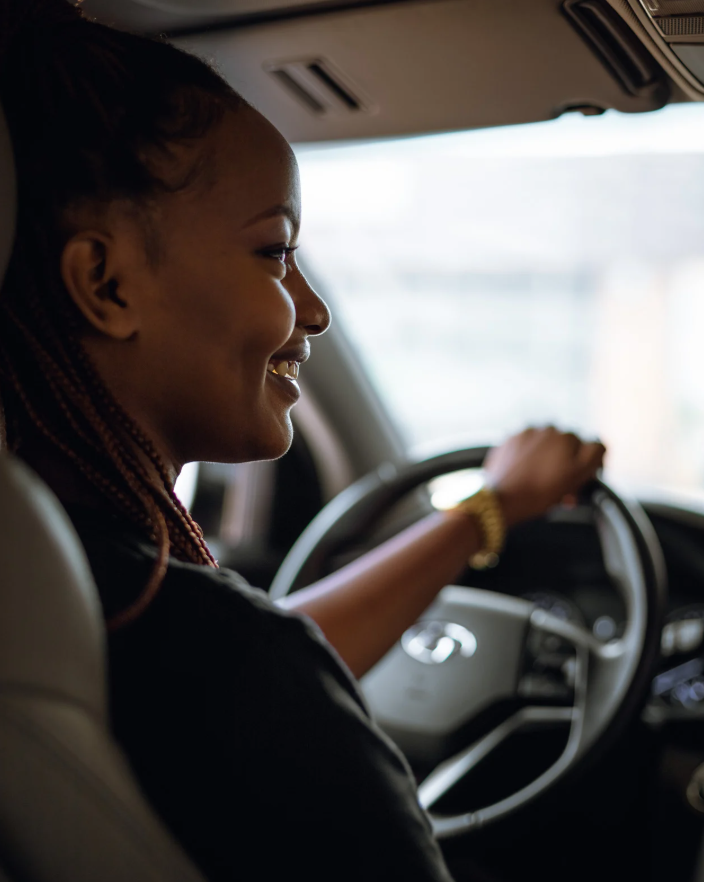
Another part of overcoming driving anxiety is connecting with what’s positive about it. Try asking yourself: “What could be enjoyable about driving?”
For example, it can provide you with the opportunity to take in the scenery of a city skyline or the rolling hills of the country. Or, it could be having a moment to yourself to decompress in the peace and quiet if you’re a parent or a busy professional. It can also be a space to listen to your favorite music, podcast, or audiobooks.
Beyond these momentary pleasures, driving can also allow you to participate in life’s most meaningful moments - like attending your niece’s soccer game, getting coffee with a friend, visiting a neighbor who’s in the hospital, or bringing a meal to someone who just had a baby. Ask yourself which of your values does driving help you carry out? Is it quality time with your loved ones? Serving your community by volunteering? Enjoying new experiences by visiting new places?
Remind yourself of these positive “why’s” before you get in the car to help you overcome the negative associations of the accident.
Step 4: Use Graded Exposure to Retrain Your Brain
Exposure practice helps your brain learn the difference between a real, present danger and a reminder of something scary that happened in the past. Over time, it helps your brain recalibrate its sense of risk so driving starts to feel more manageable again.
The goal is not to pretend cars are risk-free. Driving does involve some level of risk. The goal is to help your brain re-calibrate to expect a more accurate amount of risk. It will help you feel calm enough to practice an appropriate level of defensive driving to help yourself stay safe, without going overboard and feeling completely terrified or hypervigilant the whole time.
How to Start Exposure Practice
The best way to begin is usually with small, manageable steps. You do not have to start with highway driving or the hardest situation first.
A gradual progression might look like this:
Sit in the driver’s seat with the car off
Sit in the car with the engine running
Watch a driving video from the driver’s perspective
Imagine yourself driving in detail from start to finish
Ride as a passenger
Drive in a parking lot
Drive on quiet side streets
Drive on busier roads or highways
Drive with a support person
Drive on your own
The key is to move gradually, step by step, and not all at once.
How Long and How Often Should You Practice?
Exposure works best when you stay in the situation long enough for your anxiety to start to come down on its own. If you leave the moment discomfort rises, your brain may learn that escaping was the thing that kept you safe. This can make the fear stronger over time.
A helpful rule of thumb is to stay with the practice for about 20 to 30 minutes when possible, or long enough for your discomfort to begin decreasing. It may still feel unpleasant, but that does not mean it is going wrong. In many cases, discomfort is part of the recovery process.
The more often you practice, the more chances your brain gets to learn that driving does not always lead to danger.
For many people, practicing daily or several times per week can be very helpful. That said, the most important thing is to start somewhere. If daily practice feels overwhelming, begin with what feels realistic and build from there.
Consistency matters more than perfection.
Step 5: Know When to Seek Professional Therapy for Driving PTSD
If driving anxiety is keeping you from work, errands, family responsibilities, or normal life, you do not have to push through it alone. With the right support, relief and recovery is absolutely possible.
If you're looking for a car accident trauma therapist in Rochester, NY, we offer specialized virtual and in-person care. Book your free consultation call today!